

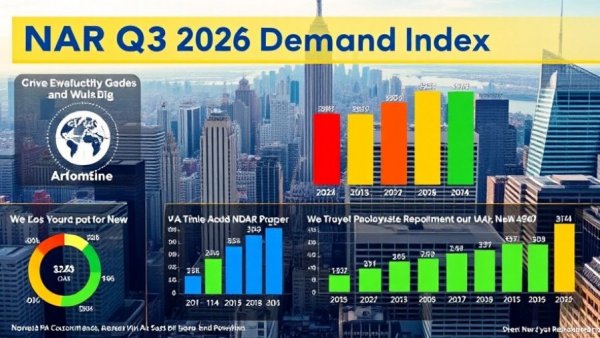
Industrial Job Growth: A Key Factor in Real Estate Demand
The landscape of commercial real estate demand in the U.S. is undergoing a transformation, largely influenced by industrial job growth. Recent data from the National Association of Realtors (NAR) highlights the geographic shifts in demand, with cities like San Antonio, Seattle, and Nashville emerging as significant players on the economic map. These changes showcase how localized employment trends—particularly in manufacturing, transportation, and warehousing—are redefining the commercial property market across various regions.
Strong Growth in Key Markets
San Antonio has seen remarkable progress, jumping from 76th to 9th place in the latest NAR Commercial Real Estate (CRE) Demand Index rankings, driven by a robust increase in industrial-related employment. Similarly, Seattle and Nashville have made impressive strides, moving from 146th to 44th and 73rd to 20th, respectively. Such advancements reflect a broader trend where companies are strategically expanding in areas showing favorable job growth, which in turn enhances the demand for commercial spaces.
Identifying Emerging Opportunities
The NAR report indicates that out of 306 metropolitan areas assessed, 143 surpassed an index score of 100, a sign of stronger-than-average conditions relative to other markets. This is particularly relevant for residential and commercial property owners as it offers a promising outlook for investment in these dynamic regions. The cities rounding out the top five demand indices—St. George, Utah; Huntsville, Alabama; and Fayetteville-Springdale-Rogers, Arkansas—demonstrate that secondary metropolitan markets are flourishing despite the stagnation seen in larger cities like Miami and New York, which registered below-average demand indicators.
The Role of Employment Variances
Nadia Evangelou, the Principal Economist and Director of Real Estate Research at NAR, emphasizes the importance of tracking regional employment trends in understanding real estate demand. While industrial employment has remained relatively flat nationwide, certain areas are experiencing significant job growth. This variance leads to divergent demand patterns within commercial real estate sectors, suggesting that local economic conditions should be a primary focus for property owners and investors.
Diverse Market Conditions
The mixed trends across various commercial sectors signal the complexity of the current economic environment. For instance, while leisure and hospitality jobs have risen in about two-thirds of metropolitan areas, the retail trade sector has struggled. These contrasts highlight that within the same regional economy, different commercial property types can experience vastly different demand levels.
Future Predictions: What Lies Ahead?
Looking ahead, understanding these employment-driven market shifts may provide actionable insights for property owners. Markets that are expanding industrial employment will likely continue to attract investment and attention. Furthermore, property owners should remain vigilant about tracking economic indicators and hiring trends to navigate the evolving landscape effectively.
Actionable Insights for Property Owners
For residential and commercial property owners, leveraging this data is crucial. Analyzing employment trends not only helps to identify potential areas of high demand but also informs buying and selling strategies that align with broader economic signals. Engaging with local economic reports can further illuminate opportunities and risks within the commercial real estate landscape.
Understanding the Bigger Picture
In conclusion, the emerging narrative surrounding commercial real estate demand illustrates a shift towards local employment indicators rather than overarching national trends. Staying informed about industrial job growth in specific markets is essential for making strategic investment decisions. As cities like San Antonio and Nashville redefine the commercial landscape, property owners must adapt their strategies accordingly to capitalize on these significant changes.


Write A Comment